
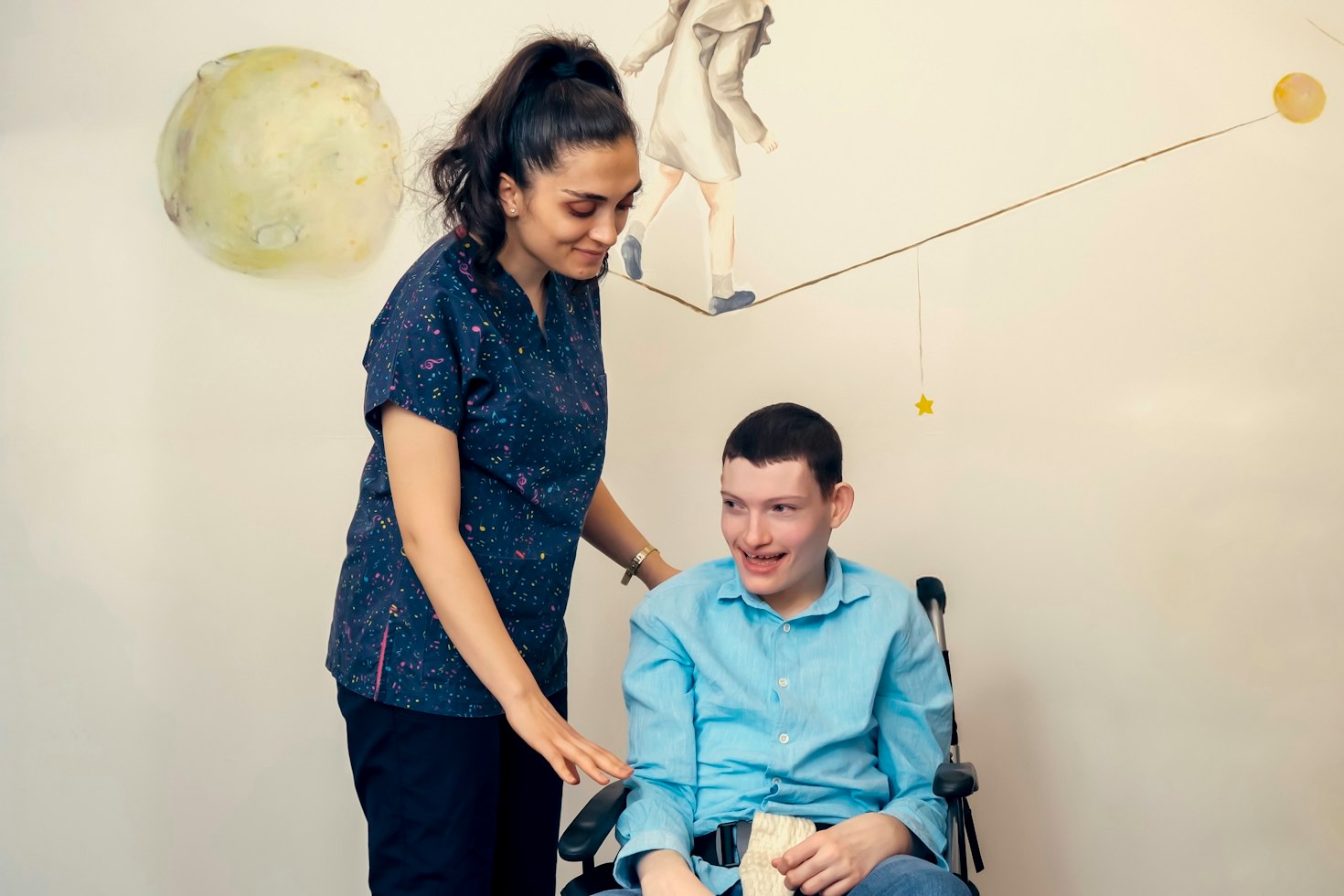
Why acceptance may be one of the hardest forms of love.
One of the questions I have been asking myself lately has nothing to do with psychopharmacology, diagnostic criteria, or the latest psychiatric guidelines. It emerged from an ordinary conversation with a patient’s mother, yet it has stayed with me far longer than many clinical discussions ever do.
She looked at me with genuine expectation and asked,
— Did he talk to you today?
Her son is almost forty years old.
I smiled and answered,
— No. Even though he is improving, he is still the same person. He has never enjoyed talking very much.
She seemed surprised by my answer, and for the rest of the day I found myself thinking less about her son than about the expectation behind her question.
Why did the possibility that he had not become more talkative seem incompatible with the idea that he was getting better?
That conversation led me to reflect on something I encounter repeatedly in psychiatry, although I suspect it reaches far beyond psychiatric hospitals. We often believe that recovery means transformation. We imagine that healing will erase personality, undo decades of preferences, and somehow recreate the person we hoped to meet. But perhaps what we are really hoping for is not recovery itself. Perhaps we are hoping for the fulfillment of an image we have carried for years.
Long before children are born, they already exist in the imagination of their parents. They become future physicians, athletes, dancers, entrepreneurs, artists, or simply adults who will validate dreams their parents never had the opportunity to fulfill. Most of these expectations are created with love. They are not malicious. They are part of what it means to dream about someone whose story has not yet begun.
The difficulty is that real children eventually appear.
They arrive with personalities that were never requested, interests that cannot be negotiated, and ways of seeing the world that belong entirely to them. Some become exactly what their parents imagined. Many do not. Others travel paths profoundly altered by schizophrenia, autism, intellectual disability, or another condition that neither they nor their families chose.
And perhaps the greatest challenge is recognizing that these realities do not make them incomplete versions of the children we imagined.
They simply make them themselves.
Sometimes, one of the most loving things we can do is stop asking someone to become the person we imagined—and begin seeing the person who has been there all along.
About the Author
Livia Baptista, Psychiatric Registered Nurse (RN) | PMHNP Candidate
Livia writes about psychiatric nursing, family education, neurodevelopmental disorders, trauma-informed care, and the emotional realities of living with severe mental illness. Her goal is to bridge the gap between psychiatric care and the families who continue the journey after discharge.
These reflections are based on experience as a psychiatric registered nurse caring of inpatient psychiatric patients with severe disabilities. They are shared to encourage understanding and thoughtful conversation about mental health and psychiatric care, not to treat or diagnose. They are not intended to replace individualized medical, psychiatric, or psychological advice.
Leave a Reply