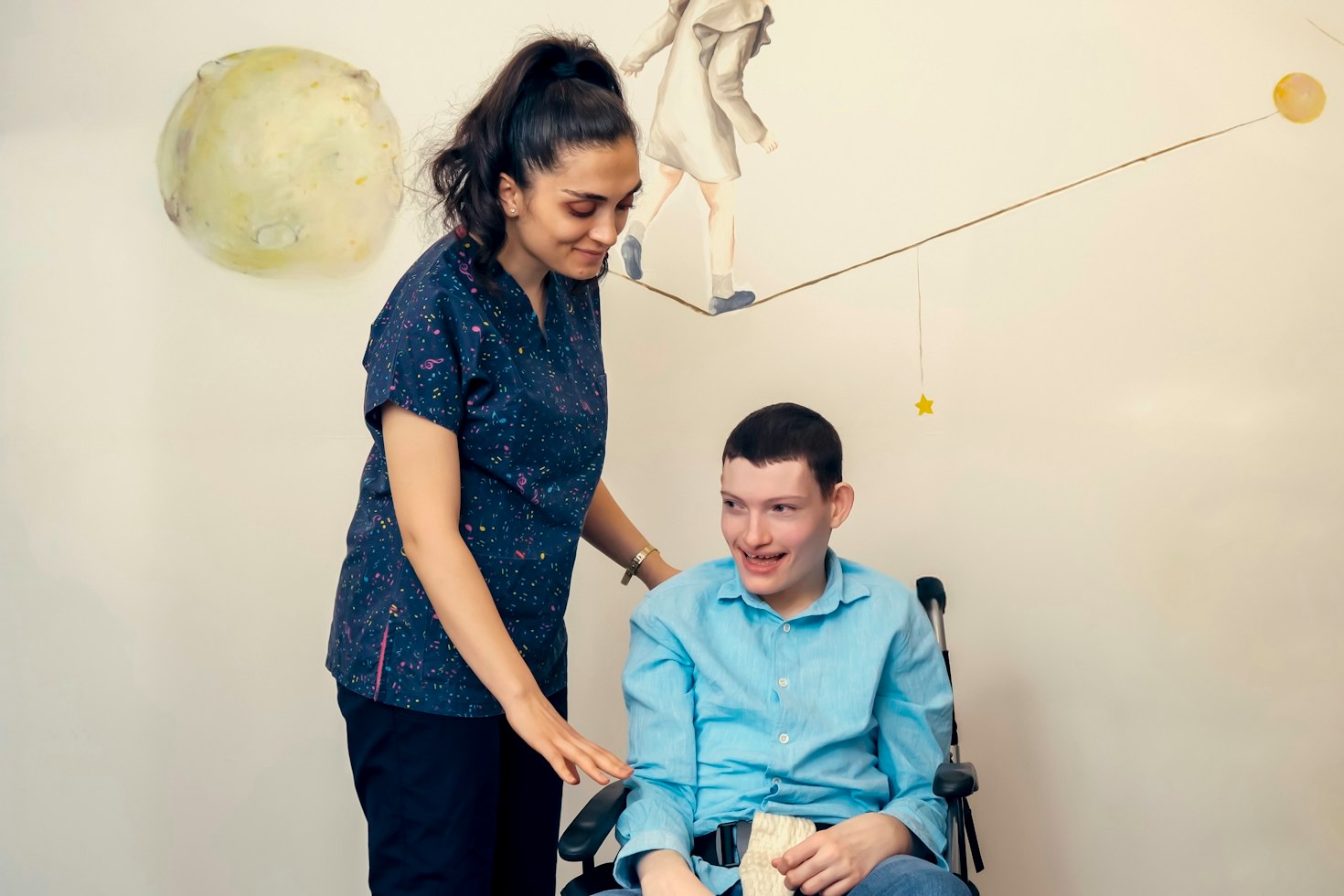

Livia Baptista
Psychiatric Nurse
Livia Baptista is a psychiatric registered nurse specializing in narrative-based clinical reflections and human stories from hospital settings. Her work explores everyday practice, therapeutic approaches, and patient care for individuals with developmental disabilities and mental illness.
Looking Beyond the Diagnosis
My journey into mental health care has taught me that a patient is never just a diagnosis.
Behind every psychiatric crisis, behavioral change, medication list, or difficult interaction is a person with a history, a family, a way of communicating, and a story that may not be visible at first.
I created this space because some of the most important lessons I have learned in healthcare did not come from a textbook. They came from real people, real situations, unexpected outcomes, difficult conversations, and moments when the right answer was not as obvious as it seemed.
My clinical experience in psychiatric hospital settings has given me the opportunity to care for people with complex mental health needs, including individuals with developmental disabilities and mental illness who may require significant support with communication, daily activities, behavioral regulation, safety, and emotional needs.
These experiences have changed the way I think about psychiatric care.
I have seen interventions that made an extraordinary difference. I have also seen well-intentioned approaches that did not work, situations where an intervention unexpectedly became a trigger, and moments when the most appropriate clinical decision was not to do more, but to step back and allow someone else to take the lead.
I have learned that therapeutic relationships cannot always be forced.
Sometimes a patient does not respond to us.
Sometimes a family sees something that the clinical team has not yet recognized.
Sometimes medication helps create the stability necessary for therapy to become possible.
Sometimes medication is prescribed without the patient fully understanding what they are taking or why.
Sometimes a situation escalates despite everyone’s best intentions.
And sometimes there is no simple explanation for what happened.
These are the stories I want to explore here.
Why I Write About Clinical Experiences
Healthcare professionals are trained to make decisions, solve problems, recognize symptoms, and provide care. But mental health often requires something equally important: the humility to recognize what we do not know.
I believe one of the most important skills in psychiatric care is knowing when to ask for help.
It is knowing when a patient needs a different professional.
It is recognizing when our own approach is increasing distress rather than reducing it.
It is understanding that the same intervention can have completely different effects on different people.
And it is remembering that a behavior we find difficult may be a form of communication that we have not yet learned to understand.
Through this website, I want to document these experiences not to criticize individual professionals or present myself as someone who always knows the right answer.
Quite the opposite.
I write because clinical experiences have taught me that we are all still learning.
My goal is to examine what happened, what worked, what did not, what could not have been predicted, and what the experience taught me.
A Growing Professional Journey
I am continuing to build my education and professional experience in psychiatric mental health, with a long-term goal of working as a Psychiatric Mental Health Nurse Practitioner.
This website is part of that journey.
For now, it is a space for clinical reflection, storytelling, education, and conversation about the realities of psychiatric care.
Over time, as my education and professional role evolve, this platform will evolve with me.
But one principle will remain at the center of my work:
Before we treat the diagnosis, we need to understand the person.
Thank you for being here.
I hope these stories make you think, question assumptions, recognize the complexity of mental health care, and perhaps see a patient, a family, or even your own professional role from a slightly different perspective.
Because sometimes the most important clinical lesson begins with a simple question:
“What am I missing?”

Blog
This section provides an overview of the blog, showcasing a variety of articles, insights, and resources to inform and inspire readers.
-
The decision to admit a loved one—or oneself—to a psychiatric inpatient unit is rarely easy.…
-